If you’ve ever worked with carbon steel sheet or plate—whether you’re a fabricator, mechanic, construction lead, or hobbyist who’s dabbled in metal projects—you’ve probably heard the term “hardness” thrown around a lot. Maybe someone yelled, “We need a harder grade for this part!” or “This sheet’s too soft, it bent when we punched it!” And if you’re a regular reader of metal-focused blogs (or a client of mine who’s bugged me a hundred times about steel specs), you’ve also probably wondered: What actually is the hardness of carbon steel sheet/plate? Is it a one-size-fits-all number? No way. As a carbon steel sheet/plate supplier who’s talked this through with hundreds of folks, let me break this down like I would over a coffee at a metal trade show—not some stuffy textbook lecture. Carbon Steel Sheet/Plate
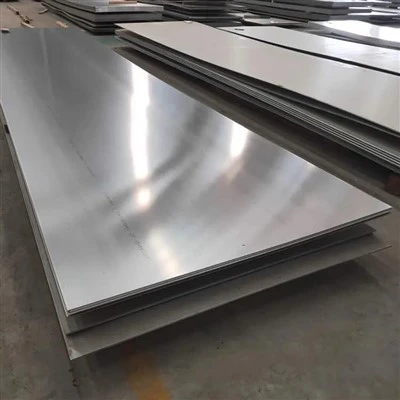
First, let’s get the basics: Carbon steel is just iron with a tiny bit of carbon (usually between 0.05% and 2.1% by weight, for the non-metallurgy nerds). That tiny carbon tweak is everything, because it’s what makes steel hard or soft, strong or bendable. And when we talk about hardness specifically, we’re not just talking about “how hard the metal feels when you tap it.” It’s a measurable property that tells you two big things: how well the steel resists scratching or dents, and how much it will deform (bend, stretch, compress) when force is applied. For our products—carbon steel sheet (thin, under 6mm, usually for things like car panels, roofing, or appliance parts) and plate (thick, over 6mm, perfect for construction beams, heavy machinery parts, or tank walls)—hardness isn’t just a spec; it’s the difference between a project that works and one that gets sent back because it bent too much or wore out too fast.
Now, the big question: What’s the typical hardness range for carbon steel sheet/plate? It’s not a single number. It depends on three main things: carbon content, heat treatment, and thickness. Let’s start with carbon content, because that’s the foundation. Most of the steel I supply falls into three main grades: low-carbon (mild) steel, medium-carbon steel, and high-carbon steel. Each has its own hardness sweet spot.
Low-carbon (mild) steel is the most common, by far—like 90% of the sheet and plate I ship. Its carbon content is 0.05% to 0.30%. If you’ve ever grabbed a thin sheet of steel that bends easily, that’s low-carbon. Its hardness? Usually somewhere between 70 and 120 on the Brinell Hardness Scale (BHN). Wait, Brinell? Yeah, that’s the scale we use most for carbon steel, because it works well for both thin sheet and thick plate—you press a hard steel ball into the metal, measure the indent size, and calculate hardness. Alternatively, some folks use the Rockwell B scale for softer stuff, which translates roughly to the same range: Rockwell B (HRB) 40 to 70. Mild steel is great for projects that need formability—like bending a garage door panel or cutting steel for a small bracket. But it’s not super hard, so it scratches easy and wears out fast if it’s under constant friction (like a shovel blade, for example). That’s where medium-carbon comes in.
Medium-carbon steel has 0.30% to 0.60% carbon. This is the middle child: stronger, harder than mild steel, but still bendable enough for most uses. If you need a steel plate that’s going to hold up to heavy loads but still be machinable, medium-carbon is your go-to. Its hardness? Typically BHN 120 to 200, or HRB 70 to HRC 20 (HRC is Rockwell C, used for harder materials). The shift to HRC here tells you this steel is noticeably tougher than mild. I sell a lot of medium-carbon plate for construction cross beams and agricultural equipment parts—they hold up way better under pressure than mild steel, and you can still cut and drill it without breaking your tools.
Then there’s high-carbon steel, which is 0.60% to 2.1% carbon. This is the hard stuff—think of the blades of a saw or a wrench. But here’s the thing: plain high-carbon steel (without extra alloys) is usually only used for super specific projects, because it’s brittle. Its hardness ranges from BHN 200 up to 600 if it’s heat-treated, but it can crack if you bend it too far. I don’t stock a ton of plain high-carbon sheet/plate because most projects need a balance of hardness and flexibility, but some clients do ask for it for things like industrial cutting blades, so I do have limited inventory.
Wait, but here’s the catch: heat treatment changes everything. A lot of people forget that hardness isn’t just about carbon content. If you take a chunk of medium-carbon steel, heat it up to like 800°C (1472°F), then quench it in water or oil, it gets way harder—like up to HRC 50 or more. Quenching locks the carbon atoms into a tight, rigid structure, making the steel super hard but also super brittle. If you then temper it (heat it again to a lower temperature, like 200-300°C), it softens it a little, removes some of that brittleness, and gives you a more durable hardness. So two pieces of the same carbon content steel sheet/plate can have totally different hardness numbers just because of heat treatment. For example, a hot-rolled mild steel sheet I ship for roofing is usually as-rolled, around BHN 80, no heat treatment needed because roofing doesn’t need extreme hardness. But if a client orders the same mild steel for a small gear, we might do a light temper to bump the hardness up to BHN 100 so it doesn’t wear out.
Thickness also plays a tiny role, but it’s way less important than carbon and heat treatment. For the same grade, a thicker plate might have a slightly lower hardness than a thin sheet of the same carbon content, because heat treatment penetrates thicker metal slower. But it’s a small difference—like 5-10 BHN, nothing to lose sleep over.
Now, why does this matter for you? Let’s be real—if you’re a guy who just needs a sheet to cut a fence panel, you don’t need to overthink hardness. But if you’re building something that’s going to take repeated impact, friction, or heavy loads, hardness is non-negotiable. Let’s run through some examples of how this plays out with the steel I supply:
- If you’re a roofer needing steel sheets for a residential roof: You want mild steel (low carbon), around BHN 70-90. It’s cheap, easy to roll into panels, and won’t dent if a small branch falls on it. If you tried to use high-carbon steel here, it would be way too brittle—one wind gust and it would crack.
- If you’re a construction company building a support beam for a warehouse: You need medium-carbon plate, around BHN 150-180. It’s strong, resists bending under the weight of the roof and stored goods, and is thick enough to handle constant pressure. Mild steel here would bend way too much over time, which is a safety hazard.
- If you’re a fabrication shop making custom parts for a farm tractor: If it’s a bracket that holds the plow, you might use medium-carbon plate (BHN 130-160) for flexibility and strength. If it’s a tiller blade that hits rocks all day, you’d want a heat-treated medium or even low-high carbon steel, bumped up to BHN 200, so it doesn’t wear down in a week.
A common mistake I see new buyers make is ordering “hardest steel possible” for everything. That’s a waste of money. High-carbon heat-treated steel costs way more, and it’s unnecessary for projects that don’t need extreme hardness. I had a client last year who ordered 10 pieces of high-carbon plate for a small shelf project—we had to tell him it was overkill, and we got him a cheaper medium-carbon plate that worked way better. He saved $1,200, and his shelf never sagged. Win-win.
Another thing to mention: standards. Most of the steel I sell is ASTM A36, which is the global go-to for mild carbon steel plate/sheet. ASTM A36 has a typical hardness of BHN 110-120, which lines up with what I mentioned earlier. Then there’s ASTM A572, which is a higher-strength low-alloy steel, often called “high-strength mild steel.” Its hardness is around BHN 130-150, a little harder than A36, for when you need more strength without paying for full medium-carbon. I keep both A36 and A572 in stock because they’re the most requested by small businesses and contractors.
Wait, let’s clear up a confusion point: Hardness vs. strength. A lot of people mix these up. Strength is how much force it takes to break or deform the steel permanently. Hardness is how well it resists scratching or indentation. They’re related, but not the same. For example, a very hard steel is usually strong, but a strong steel doesn’t have to be hard. That’s why mild steel (low strength, low hardness) works for brackets, and high-carbon heat-treated steel (high hardness, high strength) works for blades.
Now, let’s talk about how we test hardness for our products, just to give you a peek behind the scenes. When I get a batch of steel sheet/plate from the mill, every batch gets tested for hardness. For thin sheet, we use the Rockwell 30T scale, which is specifically for thin materials—no need to warp the sheet with a big Brinell ball. For thicker plate, we use Brinell, because it gives a more consistent reading for thicker metal. We also test edge hardness after cutting, because sawing or punching can slightly harden the edges (a thing called work hardening) which is good for wear resistance but can make edges brittle if we’re not careful. I always pass that info along to clients, because if they’re machining parts, they need to know to deburr edges to avoid cracking.
Is there any downside to harder steel? Yeah, like I mentioned earlier, brittleness. If you drop a piece of heat-treated high-carbon steel from a height, it might chip or crack, whereas a softer mild steel would just dent. Harder steel is also harder to machine—drilling a hole in BHN 200 steel takes twice as long as drilling in BHN 80 mild steel, so you need better drill bits. For hobbyists working on small projects, that might be a hassle; for commercial fabricators, it’s a cost they have to factor in.
Now, let’s get back to the core question: What is the hardness of carbon steel sheet/plate? It’s not a single number. It’s a range that depends on carbon content, heat treatment, and thickness, tailored to what the steel is going to be used for. For the bulk of the stock I carry—ASTM A36 mild steel sheet/plate—it’s BHN 70 to 120. For medium-carbon steel, it’s BHN 120 to 200, and for heat-treated high-carbon, it can go up to BHN 600. That’s the short answer, but the long answer is that you have to match the hardness to your project, not the other way around.
If you’re still not sure what hardness you need, that’s totally fine. I’ve been in this business for 12 years, and I’d rather walk you through the specs than send you the wrong steel. Last month, a small construction company owner emailed me panicking because their plate got bent during shipping—turned out they ordered A572 (BHN 130) when they needed A36 (BHN 110) for a temporary support beam. We swapped it for free, no questions asked, because good service is just as important as good steel.
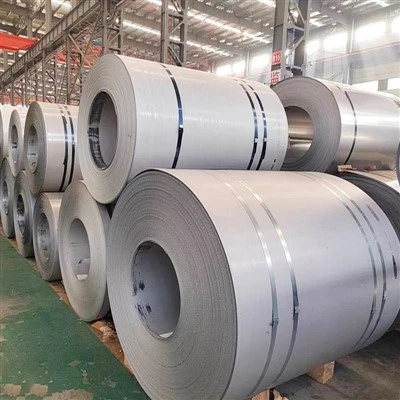
If you’re working on a project right now and need carbon steel sheet or plate, or you’re not sure what grade and hardness will work best, hit me up. I can send you free sample test reports (we keep all our hardness results on file for every batch), walk you through the specs, and get you a quote that fits your budget. No pressure, no weird hidden fees, just straight talk about steel—exactly what I’ve built this business on.
Stainless Steel Profile References:
- ASTM International. (2022). Standard Specification for Carbon Structural Steel. ASTM A36/A36M-22.
- ASTM International. (2021). Standard Specification for High-Strength Low-Alloy Columbium-Vanadium Structural Steel. ASTM A572/A572M-21.
- Callister, W. D., & Rethwisch, D. G. (2018). Materials Science and Engineering: An Introduction (10th ed.). John Wiley & Sons.
- Metal Powder Industries Federation. (2020). Hardness Testing of Ferrous Metals. MPIF Standard 41.
Wuxi Jin Ming Jian De Industry & Trade Co., Ltd.
Wuxi Jin Ming Jian De Industry & Trade Co., Ltd. is one of the most professional carbon steel sheet/plate manufacturers and suppliers in China, also supports customized service. With abundant experience, we warmly welcome you to wholesale CE approved carbon steel sheet/plate in stock here from our factory. If you have any enquiry about quotation, please feel free to email us.
Address: 2102-2105, Yuexing Building, Guangnan Road, Liangxi District, Wuxi City, Jiangsu Province, China.
E-mail: info@wxjmjdss.com
WebSite: https://www.jmjdsteelexp.com/
