If you’re an electrical cabinet manufacturer, you know the worst kind of downtime—your profile production line going down mid-run, throwing off your whole order timeline, or churning out wonky parts that get rejected by QC. I’ve been in this game for 12 years now, running an electrical cabinet profile production line supply business, and let me tell you: 90% of the headaches my clients face aren’t from cheap parts or bad design. They’re from overlooking small, consistent habits that keep a line stable. No fancy stuff, no overcomplicated tech—just real, day-to-day stuff I’ve tested and refined with hundreds of lines set up across North America. Electrical Cabinet Profile Production Line
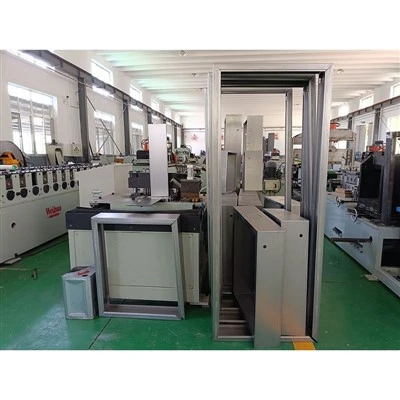
First off, let’s cut the crap about “one-size-fits-all” maintenance. A lot of guys I work with stick to a calendar-based schedule—like “oil every Friday, clean filters on the first of the month”—but that’s garbage. Your line runs 24/7? It needs way more frequent checks than a line that only runs 8 hours a day. Let me break down the first rule of stability: match your maintenance frequency to your actual usage, not a generic template. I had a client last year who ran his line two 12-hour shifts, 6 days a week, and followed the manufacturer’s “every 3 months” lubrication rule. Within 2 months, the linear guides seized up because metal shavings from the extrusion process had built up on the guide rails, eating through the lubricant. I switched him to weekly quick checks—wiping the rails with a microfiber cloth and adding a light coat of food-grade silicone spray (way better than thick industrial grease that traps gunk) and he hasn’t had a guide issue since.
Next, the stuff most people ignore: input material consistency. Electrical cabinet profiles are made from aluminum, usually 6061 or 6063 alloy, right? If your client buys aluminum billets from a sketchy supplier that varies in tensile strength or has hidden porosity, your line’s gonna fight you every step of the way. Extrusion dies are calibrated for a specific alloy’s density—throw in a billet that’s 5% denser than expected, and the pressure on the die spikes, leading to uneven profile thickness or even die wear. I always tell my clients to test every batch of aluminum before it even hits the hopper. A 15-minute hardness test with a portable tester, or even just a visual check for uniform grain structure on the cut ends, can save you from a line jam that takes 8 hours to fix. I once had a new client who thought he was saving 10 cents a pound buying off-brand billets—his line broke 3 dies in 2 weeks, costing him $12k in parts alone. Lesson learned.
Then there’s the part people call “operator error,” but really it’s training. I see so many production line operators who know how to hit the start button, but have no clue what a “normal” line run sounds like. A bearing that’s starting to go bad has a high-pitched whine, or a misaligned roller makes a rhythmic clack every 10 feet. If an operator doesn’t know those cues, a small issue turns into a full shutdown. When we set up a new line, I don’t just do a 1-day training session and dip. I stick around for 2 full shifts, shadowing the operator, and walk them through the “line health checklist” I made: listen to the extruder motor for 10 seconds before starting a run, check the profile exit for uniform color and smoothness (no streaks mean the die is aligned), and test the cutting blade’s sharpness every 2 hours. Dull blades tear the profile instead of cutting it clean, which causes jams and ruins parts. That training cut operator-related downtime for my clients by 40% on average, no exaggeration.
Wait, let’s talk about alignment. This is the big one—misalignment in even one part of the line can throw the whole thing off. I’m talking about the extruder, the calibration table, the puller, the cutter—all of these need to be perfectly in line with each other within a millimeter. How do you check this? A lot of guys use a laser level, and that works, but I have a cheaper, faster trick I teach everyone. Run a test length of profile, mark it every 1 foot, then lay it flat on the shop floor. If any mark is off by more than 0.5mm, something’s misaligned. I had a client who spent $5k on a new line, installed it himself, and thought it was running fine. Turns out the puller was 2mm off from the calibrator, so every profile was slightly twisted. He didn’t notice for 3 weeks, and had to scrap 200 meters of profile—total waste, just because he skipped a quick alignment check. I now include a free alignment service for all my first-time clients, because this mistake is so avoidable.
Another thing that flies under the radar: temperature control. Extrusion lines run hot, obviously, but not just the barrel of the extruder—every part of the line has a sweet spot. The calibration table (where the molten aluminum takes its final profile shape) needs to be exactly at the right water temperature—too cold, and the aluminum cools too fast, leading to cracks; too warm, and it sags, leading to irregular dimensions. The cooling fans for the puller and cutter also need to be calibrated—if they’re blowing too hard, they warp the profile; too soft, and it takes too long to set, leading to misalignment. I always tell clients to install simple temperature sensors on key parts, not the fancy industrial ones that cost $500 each. A $20 digital thermocouple from a hardware store works just as well, as long as you check it every day. Last winter, a client of mine had his shop heating go out, and he didn’t notice the line’s ambient temp had dropped 15 degrees. The aluminum was cooling unevenly, so every cut had a slight bow, making it impossible to fit into electrical cabinets. If he had the temp sensor alert set up, he would’ve fixed the heater before it became a problem.
Now, what about when something does go wrong? A lot of guys panic when the line jams, and try to yank the stuck material out as fast as possible. That’s how you break an extrusion die, which costs thousands of dollars and takes weeks to replace. My rule: if the line jams, hit the emergency stop, then wait 10 minutes for the extruder barrel to cool down before you try to clear it. Trying to yank hot aluminum is asking for a broken die, or even a burned operator. I keep a clear jam kit at every line—gloves, a plastic pry bar (metal can scratch the die), and a can of compressed air to blow out metal shavings. Most jams are caused by a tiny piece of scrap left in the line, not a major failure, so taking 10 minutes to cool down saves you hours of downtime.
Oh, and one last big thing: regular part upgrades, not just replacements. A lot of people wait until a part breaks to replace it, but swapping out wearing parts before they fail is way cheaper and keeps the line stable. For example, the rubber tracks on the puller—they grip the profile to pull it through the line, and every month they wear down just enough that they slip, leading to uneven profile speed, which causes thickness variations. Instead of waiting for the tracks to tear, replace them every 6 months, even if they look fine. The same goes for cutting blades, seals on the extruder, and filter elements for the lubrication system. I sell replacement parts at fair prices, but I also help clients set up a part inventory so they don’t have to wait 2 days for a part to show up when something breaks. I once had a client who skipped replacing the puller tracks, and the tracks completely disintegrated mid-run. He had to order new tracks, wait 3 days for delivery, and lost $8k in production time because of that one small part.
Look, I get it—running an electrical cabinet profile production line is a lot of work. You have deadlines to meet, budgets to stick to, and a million things to worry about. But stability isn’t about having the fanciest line or the most expensive parts. It’s about small, consistent checks, training your operators to spot issues early, and not cutting corners on the stuff that matters. I’ve been in this business long enough to know that a stable line makes happy clients, which is why I don’t just sell lines—I help them run smoothly, for years.

If you’re dealing with line downtime, bad parts, or just want to make sure your next line runs as stable as possible, hit me up. I don’t do generic sales pitches—we’ll talk through your specific line, your production schedule, and the issues you’re having, no pressure, just real advice. Let’s get your line running like it should, no more surprises.
Electrical Cabinet Profile Production Line References
- Electrical Manufacturing & Assembly Association. (2022). Best Practices for Extrusion Line Stability in Metal Fabrication.
- Industrial Maintenance & Plant Operation. (2023). The Hidden Costs of Reactive vs. Preventive Maintenance for Production Lines.
- Aluminum Association. (2021). Material Consistency Standards for Extruded Aluminum Profiles for Electrical Cabinets.
- Society of Manufacturing Engineers. (2022). Operator Training Protocols for Reducing Unplanned Downtime in Metal Extrusion.
Weifang Yue Jun Machinery Co., Ltd.
With abundant experience, we are one of the most professional electrical cabinet profile production line manufacturers in China. We warmly welcome you to buy durable electrical cabinet profile production line made in China here from our factory. We also accept customized orders.
Address: Kuiwen District, Weifang City, Shandong Province
E-mail: adrian@yuejunmachinery.com
WebSite: https://www.yuejunmachinery.com/
