Hey everyone, and thanks for stopping by. I’m Jake, and I run a small operation that’s been manufacturing screw terminal blocks for over a decade. I get asked this question all the time: “Are screw terminal blocks safe to use?” Some days I’m talking to a newbie electrician who’s just starting out, other days it’s a seasoned tech who’s dealt with their share of botched wiring jobs. The short answer? Yeah, they can be super safe—if you know what you’re doing. The long answer? Well, that’s where things get interesting, because it’s not just about the blocks themselves. It’s about how you install them, how you pick the right ones, and even how you maintain ’em down the line. Let’s break this down without all the jargon, okay? Screw Terminal Block
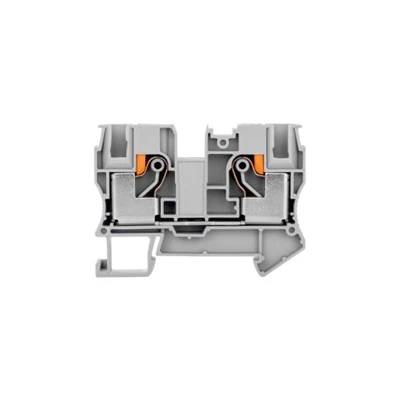
First off, let’s keep it real. I’ve seen my share of screw terminal block fails. Once, a customer sent back a batch that looked fine on the outside, but when we took ’em apart, the internal metal plates were all bent. Turned out their installer was using a drill to tighten the screws instead of a proper driver—over-torquing them so bad the metal deformed. That’s a rookie mistake, not a problem with the blocks. Another time, I heard about a setup where someone used the wrong gauge wire on tiny blocks. The wire was too thick, so when they cranked the screw down, it stripped the insulation and created a hot spot. That’s not the block’s fault either. Most people assume the product is the culprit, but 9 times out of 10, it’s user error.
Let’s talk about why screw terminals have stuck around for so long. Yeah, there are push-in and spring-loaded options these days, but screw blocks are still the go-to for most industrial and commercial jobs. Why? ’Cause they’re dead simple: you strip the wire, stick it in the slot, twist the screw, and boom—it’s connected. No fancy tools needed, just a screwdriver (as long as you use the right size). That simplicity is a big win for safety, too. If installed correctly, the screw creates a tight, permanent connection that doesn’t wiggle loose over time. Wiggly connections are a huge fire hazard—they create resistance, which builds up heat. We’re talking melted wire insulation, scorched components, even whole systems going up. Screw terminals eliminate that if you do it right.
But here’s the catch: not all screw terminal blocks are made equal. Cheap imports are the worst here. I’ve tested some blocks that cost half what ours do, and the internal contact points are thin, flimsy steel. Torque ’em even a little too hard, and they bend or crack. The screw itself is made of soft metal that strips before the contact does. That’s a safety nightmare. A lot of new electricians don’t realize not all blocks meet the same standards. We build ours to hit IEC 60947-7-1—basically, the global rulebook for terminal blocks. That means they’ve been tested for things like torque resistance, current capacity, and temperature tolerance. If a block doesn’t have that certification, walk away. It’s not worth the risk.
Let’s dive into the installation part, ’cause that’s where most safety issues pop up. I always tell my customers three rules: strip the wire correctly, use the right torque, and don’t cram too much wire into one block. Stripping is basic, but people mess it up all the time. If you leave insulation on the wire and twist the screw, that insulation can melt over time, shorting out the circuit. If you nick the copper inside while stripping, the wire is weaker, and it might not carry the current it’s supposed to—again, hot spots. We recommend stripping about 8mm of insulation, so the entire stripped wire fits in the slot without any insulation peeking out.
Torque is even more important. Every block comes with a torque rating—ours are printed right on the side, like “0.8 Nm” or “1.2 Nm.” That’s the exact amount of pressure you need to apply to the screw. Too little, and the connection is loose; too much, and you break the block or the wire. I see electricians using screwdrivers with the wrong tip all the time—flathead on a Phillips screw, or vice versa. That strips the screw head, so you can’t adjust it later, and you don’t get a tight connection. Invest in a set of precision screwdrivers—they’re cheap, and they save you from a lot of headaches.
And never, never cram multiple wires into a single slot. Some people think, “Hey, the block holds X amps, two wires should be fine!” Nope. Each block is rated for a specific gauge and number of conductors. If you put two wires in a slot meant for one, you create resistance, and again, heat builds. I’ve seen blocks smoke because someone tried to cram a 14-gauge and 16-gauge wire into a slot that only handles 14-gauge. Don’t do that. Follow the specs.
What about maintenance? Wait, screw terminals need maintenance? Yeah, surprisingly. Over time, especially in industrial settings where there’s vibration (machinery, trucks driving by, etc.), the screw can loosen up. I had a customer with a conveyor belt system that ran 24/7—after six months, some of the terminals had worked loose. They just needed a quick torque check, and that was it. No big deal, but if they’d ignored it, the whole line would’ve shut down, or worse, caused a fire. We tell all our customers to do a visual check every quarter, and a torque check once a year, especially for high-vibration setups. That’s not optional—that’s how you keep things safe long-term.
Now, let’s compare to other types, ’cause I know some people swear by push-in terminals. Push-in is great for quick installs, like in residential switches. But here’s the thing: they’re way easier to mess up. If you don’t push the wire in all the way, it’ll come loose. And over time, the spring mechanism can wear out, so it loses tension. Screw terminals don’t have that moving part—they’re a fixed connection, as long as the screw is tight. For heavy-duty jobs, like control panels or outdoor wiring where things are exposed to temperature swings, screw blocks are more reliable. Temperature changes make metal expand and contract—push-in springs can fatigue faster in those conditions. Screw connections hold up way better.
But wait, let’s address the elephant in the room: bad press. A few years back, there was a bunch of news about terminal block fires in apartment buildings. A lot of those turned out to be cheap, uncertified blocks that were installed by unlicensed workers. They used the wrong torque, the wrong wire, and the wrong tools. The media didn’t say “screw terminals are unsafe”—they said “cheap, poorly installed electrical parts are unsafe.” That’s a huge difference. I always tell people not to throw the baby out with the bathwater. Screw terminals are not inherently dangerous. The same goes for any electrical component—wire, outlets, circuit breakers—if you buy garbage and install it wrong, it’ll cause problems.
Let’s talk about some real-world data, just to back this up. The Electrical Safety Foundation International (ESFI) does annual surveys on home electrical fires. Their 2023 report said that faulty wiring and components cause around 45,000 fires a year in the US. Of those, terminal blocks are listed as a small but consistent cause, but 82% of those cases involved uncertified products or improper installation. That lines up exactly with what I see. The ESFI actually recommends screw terminal blocks for most commercial and industrial applications, as long as they meet industry standards. So it’s not just me saying this—there’s real safety data behind it.
I also want to mention specific use cases. Screw terminals are perfect for high-current applications, like 20A circuits for kitchen appliances, or 100A feeds for industrial motors. The screw creates a low-resistance connection, which is key for carrying that much power without heating up. Push-in or spring-loaded blocks rarely have the same current rating—most top out at 15 or 20A, so they’re not built for heavy loads. If you’re wiring a job that needs more than that, screw terminals are the only safe choice.
What about common myths? I hear all the time that screw terminals are hard to reuse. Yeah, if you over-torqued them before, it might be tough, but if you use the right torque, you can loosen the screw, pull the wire out, and put it back without any issues. I’ve done it a hundred times on service calls. Another myth: they take too long to install. For a single wire, maybe a second longer than push-in, but when you’re working on a big panel with 50 terminals, it evens out. And the peace of mind that comes with a solid connection? That’s worth the extra 10 seconds.
Let’s wrap this up with a quick list of what makes screw terminal blocks safe, if you do it right: 1) Certified to IEC or local standards (don’t buy random cheap stuff), 2) Correct wire stripping (no insulation left on, no nicked wires), 3) Torque to the exact rating, 4) No overloading slots with too many wires, 5) Regular maintenance (checking screws for tightness). Skip any of these, and you’re asking for trouble. Follow them, and they’re one of the safest, most reliable connection methods out there.
At the end of the day, my whole business is built on making safe, quality terminal blocks. I don’t cut corners, and I stand behind every product we sell. If you’re a contractor, an electrician, or a business owner looking for terminal blocks that won’t let you down, we’ve got you covered. We work with everyone from small residential electricians to large industrial companies, and we can help you pick the right size and rating for your job. Whether you need a few pieces for a home project or a full order for a control panel, we’re here to assist with whatever you need—no pressure, no hidden fees. Just good parts and honest advice.

If you have questions about installation, torque, or which blocks are right for your setup, hit us up. We’re always happy to chat, and we’ll make sure you get exactly what you need to keep your projects safe. Don’t let bad experiences with cheap or misused terminal blocks turn you off—done right, screw blocks are still the backbone of safe electrical connections.
Specialized Relay Module References:
Electrical Safety Foundation International. (2023). Annual Electrical Fire Safety Report.
International Electrotechnical Commission. (2020). IEC 60947-7-1: Low-voltage switchgear and controlgear – Part 7-1: Ancillary devices for switchgear and controlgear – Terminal blocks for copper conductors.
Occupational Safety and Health Administration. (2022). Electrical Wiring and Terminal Connection Safety Guidelines.
National Fire Protection Association. (2021). NFPA 70: National Electrical Code, Article 314 (Outlet, Device, and Wiring Installation).
Zhejiang Weide Electric Co., Ltd.
Zhejiang Weide Electric Co., Ltd. is one of the most professional screw terminal block manufacturers and suppliers in China, featured by quality products and low price. If you’re going to buy the newest screw terminal block, welcome to get free sample from our factory. We also accept customized orders.
Address: No. 555, South Binhe 2nd Road, Yueqing City, Zhejiang Province, China
E-mail: zjwdir@wdirele.com
WebSite: https://www.chweide.com/
