Yo, folks! I’m a dude running a driving chain supply business. You know, driving chains are one of those super important parts in a bunch of machines and vehicles. They move power from one place to another, making things work like a charm. But what a lot of people don’t think about is how different materials can really change how well these driving chains perform. So, let’s dig into that. Driving Chain

First off, let’s talk about steel. Steel is like the go – to material for driving chains. Why? Well, it’s got some great properties. For starters, steel is super strong. It can handle a whole lot of stress and tension without breaking. That means when you’re using a driving chain in something like a heavy – duty industrial machine or a big truck, a steel chain can stand up to the wear and tear.
There are different types of steel used in driving chains too. High – carbon steel is known for its hardness. This kind of steel is really good at withstanding abrasion. When the chain is constantly moving and rubbing against other parts, the high – carbon steel surface doesn’t wear down easily. It keeps the chain in good shape for a long time.
But here’s the thing about high – carbon steel. It’s a bit brittle. If you subject it to a sudden shock load, there’s a chance it could crack or break. That’s where alloy steel comes in. Alloy steel has other elements mixed in with the steel, like chromium, nickel, or molybdenum. These elements give the chain better toughness. So, it can handle those shock loads much better than high – carbon steel. It’s like having a chain that’s both strong and flexible.
Another great thing about steel is its heat resistance. In some applications, like in engines or near hot industrial processes, the chain can get really hot. Steel can hold up well under high temperatures. It doesn’t lose its strength or shape easily when it’s hot, which is crucial for the proper functioning of the machinery.
Now, let’s switch gears and talk about stainless steel. Stainless steel is awesome when you’re dealing with a wet or corrosive environment. You see, regular steel can rust when it comes into contact with water or certain chemicals. But stainless steel has a special coating that resists corrosion. So, if you’re using a driving chain in a marine application, like on a boat, or in a food processing plant where there are a lot of cleaning agents, stainless steel is the way to go.
However, stainless steel isn’t as strong as some other types of steel. It’s a bit more expensive too. So, you’ve got to balance the need for corrosion resistance with the cost and the strength requirements of your application.
Moving on to plastic. Yeah, you heard me right, plastic driving chains. Plastic chains are lightweight. They’re easy to handle and install. This makes them a popular choice in some applications where weight is a big concern, like in some automated conveyor systems in factories.
Plastic is also very quiet. When the chain is moving, it doesn’t make all that clanking noise that steel chains do. This is great in environments where noise is an issue, like in offices or hospitals.
But plastic chains have their limits. They’re not as strong as steel chains. They can’t handle high loads or high – speed applications. Over time, plastic can also wear out, especially if it’s exposed to sharp objects or high – friction situations.
When we talk about performance, there are a few key areas where the choice of material really matters. One is wear resistance. How long the chain can keep going before it needs to be replaced. A chain made of a material with good wear resistance can save you a lot of money in the long run. You won’t have to keep buying new chains all the time.
Another aspect is fatigue resistance. Driving chains are constantly under stress. They’re bent, stretched, and pulled. A chain that can resist fatigue will last longer and work more reliably. Alloy steel chains, for example, are really good at this. They can handle repeated stress without breaking down.
Power transmission efficiency is also important. The material of the chain can affect how well it transfers power. A smooth – running chain made of the right material will transfer power more efficiently, which means the machine can work better with less energy waste.
Let’s also consider the cost – performance ratio. As a supplier, I know that cost is always a factor for my customers. You want the best – performing chain, but you also don’t want to break the bank. Steel chains are generally more cost – effective in high – load and high – performance applications. Plastic chains can be a good option for low – cost, low – load applications.
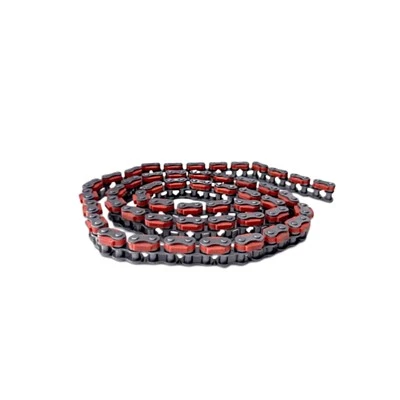
Now that you know how different materials can affect the performance of a driving chain, you’re in a better position to choose the right chain for your needs. If you’re in the market for a driving chain, feel free to reach out to me. I’ve got a wide range of chains made from different materials, and I can help you find the one that fits your application perfectly. Whether you need a heavy – duty steel chain for your industrial machine or a lightweight plastic chain for your conveyor system, I’ve got you covered. So, don’t hesitate to get in touch and we can start chatting about your specific requirements.
Conveyor Chain References:
- "Handbook of Chain Drives" by the Chain & Drive Association
- "Materials Science for Engineers" textbooks
Anhui Huihuang Chain Transmission Co., Ltd.
Anhui Huihuang Chain Transmission Co., Ltd. is one of the most professional driving chain manufacturers and suppliers in China, also supports high quality customized service. Please feel free to buy discount driving chain made in China here from our factory. Welcome to contact us for pricelist and free sample.
Address: NO.3 YONGQIANG ROAD. JIXI.ANHUI.CHINA
E-mail: 754590660@qq.com
WebSite: https://www.hhchains.com/
