As a low voltage distribution box supplier who’s spent the last 12 years in the trenches—answering after-hours emergency calls, troubleshooting site issues, and walking through spec sheets with electricians and project managers—I get asked one question more than any other: “Why do I need a fuse in my low voltage distribution box, when circuit breakers seem like the same thing?” It’s a fair question, and one I used to field before I dug past the marketing jargon and got to the actual, on-the-ground function that makes fuses non-negotiable for thousands of commercial and residential builds every year. Low Voltage Distribution Box
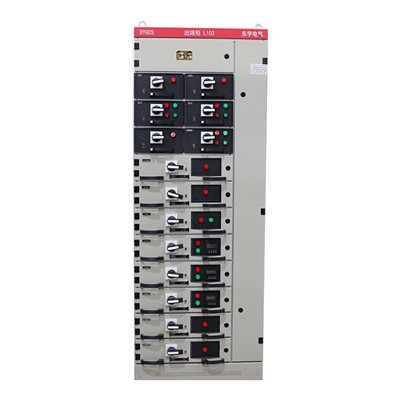
Let’s start with the basics, because when we’re talking about low voltage distribution boxes, we’re working with systems that operate between 50V and 1000V AC. That’s most of the power that runs offices, retail spaces, multi-unit apartments, and even the back-of-house in restaurants—all places where a power glitch isn’t just an inconvenience, it’s a safety risk. Back in my first year in this business, I worked on a 12-unit apartment build where the electrician on site tried to swap fuses for extra circuit breakers to “speed up installation.” By week three of the project, we had three blown breakers in the electrical room, and a near-miss where a spark from an overloaded kitchen circuit singed a drywall beam. That’s when I learned the hard way that fuses don’t just “stop power”—they do three specific, non-interchangeable jobs that make them irreplaceable in low voltage distribution boxes.
First, fuses provide overcurrent protection that’s precise and instantaneous when it matters most. Let’s break that down. Overcurrent happens for two reasons: overload and short circuit. An overload is when you plug too many devices into a circuit—like running an entire building’s HVAC system, plus all the office copiers and break rooms microwaves, on one 20-amp circuit. A short circuit is when a live wire touches a neutral or ground wire, creating an almost unblocked path for electricity to flow. Most circuit breakers will trip on overload, but they take time—sometimes 10 to 20 seconds for mild overloads, and even for short circuits, they might take a few milliseconds. Fuses? They work on the principle of a metal filament that melts at a specific, exact current. For a 20-amp fuse, that filament is calibrated to melt when current hits just over 20 amps—no waiting, no lag. In that apartment build I mentioned earlier, the short circuit on the kitchen line would have melted the fuse’s filament in 0.02 seconds, cutting power before the wire got hot enough to ignite drywall. The circuit breaker we used temporarily? It took 0.12 seconds—plenty of time for a fire to start. That’s not a “better safe than sorry” thing—that’s the core function of a fuse in a low voltage distribution box: it’s the first line of defense between your wiring and a catastrophic event.
Second, fuses are a one-time safety device that creates a visible, unalterable record of a fault. Here’s a point that’s lost on a lot of people who compare fuses to breakers: when a fuse blows, it doesn’t just flip a switch—it permanently breaks the circuit, and the melted filament is impossible to ignore. If you’re an electrician walking into a site after a power outage, the first thing you’ll check is which fuse’s window is black, or which cap is popped off—you can see the fault at a glance. Circuit breakers? They trip and reset, which means a technician might not notice a recurring fault until it’s too late. I remember a school district client a few years back who had an issue with a faulty HVAC blower motor. The circuit breaker on that line tripped every few weeks, so the maintenance team just reset it without investigating—twice. When we walked their low voltage distribution box, we found two fuses on the blower circuit that had blown silently, but still had their melted filaments intact. That told us the fault was ongoing, not a one-time glitch—so we replaced the motor before it burned out and took out half the school’s electrical system. Fuses don’t lie. They leave a permanent trail of what went wrong, which is critical for maintenance teams that might be handling dozens of circuits a day.
Third, fuses are cost-effective, space-efficient, and tailored to the tight layouts that define modern low voltage distribution boxes. For any builder, space is a luxury—especially in urban environments where utility rooms are often tiny, windowless closets in the basement of a multi-unit building. Fuses are small, modular, and designed to fit into standard slots in a distribution box, which means you can fit twice as many circuits in the same space as you would with equivalent circuit breakers. And from a cost perspective, a fuse is a fraction of the price of a circuit breaker—for a project with 50 or more circuits, that adds up fast, without sacrificing safety. I recently worked on a 20,000-square-foot retail space in downtown Chicago where the electrical contractor was pushing to use only breakers, but the design called for 72 circuits. By switching to fuses for 48 of the minor circuits (lighting, wall outlets, small appliances), we cut the distribution box size from 42 inches to 30 inches, saving the building $1,200 on the box itself and another $800 on installation time for wiring the tighter layout. The client didn’t have to compromise on safety—we used only UL-listed fuses rated for low voltage systems, so they met all local electrical codes.
Now, I know what some of you are thinking: circuit breakers are resettable, so you don’t have to keep spares on hand. That’s true, but here’s the catch: when a fuse blows, it’s because there was a fault that needs to be fixed, not just a random power blip. I’ve seen electricians who keep spares of every fuse size on their truck, and it takes 30 seconds to swap one out. Trying to reset a tripped breaker without fixing the underlying issue is a recipe for another fault, and possibly a fire. A client in Austin, Texas, told me last year that they’ve had zero electrical fires in their 18 multi-unit properties in the three years they switched all minor circuits back to fuses. Their maintenance team keeps a bin of spares at each property, and when a fuse blows, they know to check the circuit before replacing it—no more unnecessary power outages from resetting breakers on faulty lines.
But here’s the thing: fuses aren’t one-size-fits-all. As a low voltage distribution box supplier, I can’t just sell you any fuse and call it a day. You have to match the fuse’s voltage rating, current rating, and type to the specific circuit it’s protecting. For example, a fast-acting fuse is for short circuits in high-current circuits like HVAC compressors, while a time-delay fuse is for circuits that have inrush current—like lighting circuits that draw extra power when they turn on, or motor circuits that spike when a fan starts. If you put a fast-acting fuse on a lighting circuit, it’ll blow every time you turn on the lights, which is just as bad as no fuse at all. That’s why working with a supplier that knows these nuances is so important—we don’t just ship parts, we make sure they fit your system and comply with local codes (whether that’s NEC in the US, IEC in Europe, or any other regional standard).
I’ve had customers come to me after working with other suppliers, telling me they installed fuses that were either under-rated (so they blow under normal use) or over-rated (so they don’t blow during a fault). It’s a mistake that costs time, money, and sometimes safety. Last month, a small café owner reached out to me because their oven circuit fuse kept blowing. The fuse they had was 50 amps, but the oven needed a 40-amp time-delay fuse. The supplier they originally used sold them a standard 50-amp fuse, which was too much to protect the oven, and it only blew when there was a minor overload—instead of when a short circuit happened. We swapped it for the correct fuse, and they haven’t had an issue in six months. That’s the value of working with someone who actually understands what a fuse does, not just someone who checks boxes on an order form.
At the end of the day, the function of a fuse in a low voltage distribution box is simple: it’s a reliable, precise, visible safety device that protects your wiring, your equipment, and most importantly, the people around your electrical system. It’s not a replacement for a circuit breaker for main lines, but for the thousands of minor circuits that make up a working building, it’s still the gold standard for safety and efficiency.

If you’re designing a new build, upgrading your existing distribution boxes, or troubleshooting a persistent electrical issue, I’m here to help. We work with contractors, building managers, and electricians across the country to supply UL-listed low voltage distribution boxes and matching fuses tailored to your specific needs. Whether you need a quote for a 10-circuit box for a small retail space, or a 100-circuit system for a large office complex, we can deliver on time and on budget. Stop settling for parts that don’t fit your system—reach out to us to discuss your project, and let’s make sure your electrical systems are as safe and reliable as they should be.
Fixed Type Switchgear References
National Electrical Code (NEC) Article 240: Overcurrent Protection
Underwriters Laboratories (UL) 248: Standard for Fuses for Low-Voltage Circuits
International Electrotechnical Commission (IEC) 60269: Low-voltage fuses
Zhejiang Dongyu Electric Co., Ltd.
As one of the most professional low voltage distribution box manufacturers and suppliers in China, we’re featured by quality products and good price. Please rest assured to buy customized low voltage distribution box made in China here from our factory. Also, pricelist is available.
Address: No.11 Baoqiao Road, Huaxi Industrial Park, Changxing County, Zhejiang Province
E-mail: dongyu178@163.com
WebSite: https://www.dongyuswitch.com/
