Hey there! I’m a supplier of cast parts, and today I wanna talk about what factors affect the solidification process of cast parts. It’s a super important topic in the casting world, and understanding these factors can really help us make better-quality cast parts. Cast Parts

First off, let’s talk about the alloy composition. Different alloys have different solidification characteristics. For example, some alloys have a wide freezing range, which means they solidify over a relatively large temperature interval. This can lead to problems like shrinkage porosity. When the alloy is in this wide freezing – range state, the liquid metal can’t easily flow to fill the spaces left by the solidifying metal, resulting in tiny holes in the cast part. On the other hand, alloys with a narrow freezing range solidify more quickly and evenly. This makes it easier to get a dense and defect – free cast part. As a supplier, I’ve seen firsthand how choosing the right alloy composition can make or break a casting project. I always work closely with my customers to select an alloy that suits their specific needs and the intended application of the cast part.
The pouring temperature is another crucial factor. If the pouring temperature is too high, the liquid metal will have a lower viscosity, which means it can flow more easily into the mold cavity. But there’s a downside. Higher pouring temperatures can increase the amount of shrinkage that occurs during solidification. The metal contracts more as it cools from a higher initial temperature, and this can lead to larger shrinkage cavities. Also, high – temperature pouring can cause more reactions between the metal and the mold material, which might result in surface defects. On the flip side, if the pouring temperature is too low, the metal may not fill the mold completely, leading to incomplete castings or cold shuts. Cold shuts happen when two streams of liquid metal meet in the mold but don’t fuse properly because they’ve cooled down too much. I usually recommend a specific pouring temperature range based on the alloy type and the complexity of the cast part design.
Mold design plays a huge role in the solidification process. The shape and size of the mold cavity affect how the heat is transferred from the liquid metal to the mold. A well – designed mold will allow for uniform heat transfer, which is essential for proper solidification. For example, if the mold has thick sections and thin sections, the thick sections will cool more slowly than the thin sections. This can cause uneven solidification and lead to internal stresses in the cast part. To counter this, we can use things like chills. Chills are made of materials with high thermal conductivity, and we place them in the mold near the thick sections to speed up the cooling process there. This helps to balance out the solidification rate across the entire part. Also, the gating system in the mold is important. It controls how the liquid metal enters the mold cavity. A good gating system ensures that the metal fills the mold smoothly and without turbulence, which can trap air and cause defects.
The cooling rate is a major factor as well. A fast cooling rate can result in a fine – grained microstructure in the cast part. Fine – grained materials generally have better mechanical properties, like higher strength and hardness. But a very fast cooling rate can also lead to high internal stresses. These stresses can cause the part to crack during or after solidification. On the other hand, a slow cooling rate gives the metal more time to form a coarse – grained microstructure. Coarse – grained parts may have lower strength and ductility. As a supplier, I often use different cooling methods to control the cooling rate. For simple parts, air cooling might be sufficient. But for more complex or high – performance parts, we might use water cooling or a combination of air and water to get the desired cooling rate.
The presence of impurities in the metal can also mess up the solidification process. Impurities can act as nucleation sites for the formation of solid crystals during solidification. Some impurities can cause the formation of unwanted phases in the microstructure, which can degrade the mechanical properties of the cast part. For example, sulfur in steel can form sulfide inclusions, which can reduce the ductility and toughness of the steel casting. To deal with impurities, we use various refining processes. For instance, we can use ladle refining to remove impurities from the molten metal before pouring. This helps to ensure that the cast part has a clean and homogeneous microstructure.
Another aspect is the pressure during solidification. Applying pressure can help to eliminate shrinkage porosity. When pressure is applied to the liquid metal during solidification, it forces the metal to fill the spaces left by the solidifying metal. This results in a denser and more defect – free cast part. There are different ways to apply pressure, such as using a die – casting machine where the metal is injected into the mold under high pressure. In investment casting, we can use a pressure – assisted solidification process to improve the quality of the castings.
Now, let’s think about how these factors interact with each other. For example, the alloy composition can affect the optimal pouring temperature and cooling rate. An alloy with a high melting point might require a higher pouring temperature, but we also need to be careful about the shrinkage issues. And the mold design has to be adjusted based on the alloy’s solidification characteristics. If we’re casting an alloy with a wide freezing range, we need to pay special attention to the gating system and use chills to ensure uniform solidification.
As a cast parts supplier, I understand that getting the solidification process right is key to delivering high – quality products to my customers. Every project is unique, and I have to consider all these factors when I work on a casting job. I always strive to communicate with my customers, understand their requirements, and provide them with the best – possible solutions.
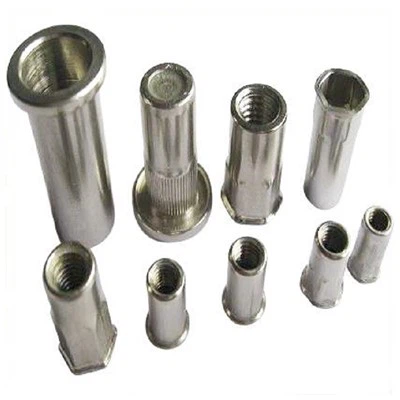
If you’re in the market for cast parts, whether it’s for automotive, aerospace, or any other industry, I’d love to work with you. We can discuss your project, take into account all the factors that affect the solidification process, and make sure we produce cast parts that meet your exact specifications. Don’t hesitate to reach out and start a conversation about your casting needs.
Stamped Brackets References
- "Foundry Technology" by John Campbell
- "The Science and Engineering of Materials" by Donald R. Askeland and Pradeep P. Fulay
Hangzhou Zhalihui Import And Export Co., Ltd.
We are one of the most experienced cast parts manufacturers and suppliers in China, specialized in providing high quality customized products. Please feel free to buy discount cast parts in stock here from our factory. Contact us for quotation.
Address: Room 2801, Building 2, Taifu Plaza, No.17, Tonghui Middle Road, Chengxiang Street, Xiaoshan, Hangzhou, Zhejiang
E-mail: Chars_1979@hotmail.com
WebSite: https://www.zhalihui.com/
