Hey there! I’m a supplier of Zero Glue Line Edge Banding, and I often get asked this question: "Can Zero Glue Line Edge Banding be used in humid environments?" Well, let’s dive right into it and find out. Zero Glue Line Edge Banding

First off, let me give you a quick rundown of what Zero Glue Line Edge Banding is. It’s a type of edge banding that provides a seamless and clean look to furniture edges. Unlike traditional edge banding, it doesn’t leave a visible glue line, which gives a more aesthetically pleasing finish. It’s made using advanced technology that ensures a strong bond between the edge band and the substrate.
Now, let’s talk about humid environments. Humidity can be a real challenge for many materials. High humidity levels can cause wood to swell, metal to rust, and adhesives to break down. So, the big question is, how does Zero Glue Line Edge Banding hold up in such conditions?
One of the key factors to consider is the materials used in the edge banding. Most Zero Glue Line Edge Bandings are made from high – quality PVC, melamine, or acrylic. These materials have different properties when it comes to moisture resistance.
PVC edge banding is quite popular. It’s relatively affordable and has decent moisture resistance. PVC is a synthetic material that doesn’t absorb water easily. However, in extremely humid environments, it can still be affected. Over time, the constant exposure to moisture can cause the PVC to become brittle or lose its shape. But if the humidity is within a reasonable range, say around 40 – 60%, PVC Zero Glue Line Edge Banding can work just fine.
Melamine edge banding is another option. Melamine is a hard and durable material. It has a good level of moisture resistance, especially when it’s properly sealed. The surface of melamine is smooth and non – porous, which helps to prevent water from seeping in. In a moderately humid environment, melamine Zero Glue Line Edge Banding can last for a long time. But if the humidity is very high and there’s a lot of condensation, it might start to show signs of damage.
Acrylic edge banding is known for its high – end look and excellent durability. It has a very good resistance to moisture. Acrylic is a strong and stable material that can withstand a fair amount of humidity. It doesn’t warp or discolor easily, even in a humid setting. So, if you’re looking for an edge banding that can handle a bit more moisture, acrylic might be the way to go.
Another important aspect is the adhesive used in the Zero Glue Line Edge Banding. The adhesive is what holds the edge band to the substrate. In a humid environment, the adhesive needs to be able to resist moisture. There are special moisture – resistant adhesives available for Zero Glue Line Edge Banding. These adhesives are designed to maintain their bond even when exposed to water or high humidity.
When installing Zero Glue Line Edge Banding in a humid environment, proper installation is crucial. Make sure the surface of the substrate is clean and dry before applying the edge band. Any moisture on the surface can affect the adhesion. Also, ensure that the edge band is applied evenly and firmly. If there are any gaps or bubbles, moisture can seep in and cause problems.
Let’s look at some real – world examples. In a bathroom, which is a high – humidity area, Zero Glue Line Edge Banding can be used. But you need to choose the right material and adhesive. Acrylic edge banding with a moisture – resistant adhesive would be a great choice. In a kitchen, where there’s also some humidity from cooking and washing, PVC or melamine edge banding can work well as long as the humidity is controlled.
However, there are some limitations. If you’re in an environment with extremely high humidity, like a steam room or a coastal area with constant saltwater spray, Zero Glue Line Edge Banding might not be the best option. In these cases, you might need to look for more specialized materials or additional protective measures.
So, to answer the question, yes, Zero Glue Line Edge Banding can be used in humid environments, but it depends on several factors. The type of material, the adhesive, and the level of humidity all play a role. If you choose the right combination and install it properly, you can get a long – lasting and beautiful finish.
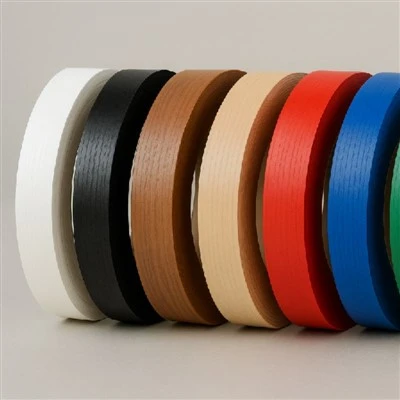
If you’re interested in using Zero Glue Line Edge Banding for your project, whether it’s in a normal or a slightly humid environment, I’d love to talk to you. We have a wide range of options available, and our team can help you choose the best one for your needs. Just reach out to us, and we can start a conversation about your project and how our Zero Glue Line Edge Banding can make it look great.
ABS Edge Banding References:
- "Handbook of Wood Science and Technology"
- "Plastics in Furniture Manufacturing"
- "Adhesive Technology for Woodworking"
Linyi Meador New Materials Co., Ltd.
As one of the most experienced zero glue line edge banding manufacturers and suppliers in China, we offer a wide range of products with superior quality. We warmly welcome you to buy bulk premium zero glue line edge banding from our factory. Good service and punctual delivery are available.
Address: Meidu New Materials, No. 66 Zhenxing Road, Tanyi Town, Feixian County, Linyi City, Shandong Province
E-mail: meador@zohomail.cn
WebSite: https://www.meadorfactory.com/
