If you’ve ever waited at a red light that turns green just as you approach, or felt the smooth, seamless merge of a self-driving car into traffic next to you, you’re not just experiencing basic automotive engineering. You’re witnessing the quiet, uncelebrated work of time and frequency synchronization—the backbone that keeps autonomous vehicles (AVs) from turning into dangerous, disconnected robots on wheels. As the founder of a time and frequency synchronization company, I’ve spent the last 12 years knee-deep in this technology, fielding questions from AV engineers who know their self-driving systems can’t function without it but don’t always fully grasp why even a microsecond of misalignment can unravel everything. Time and Frequency Synchronization
Most people think of AVs as relying on cameras, lidar, and radar, and that’s true. But all those sensors generate data, and that data needs to be coordinated, timed, and aligned to make sense. Let’s start with a relatable example: two AVs approaching an intersection. One has a lidar that measures distance 100 millionths of a second faster than its radar, and the other has a GPS signal that’s 50 microseconds off from the traffic light’s timing. What feels like a tiny gap in time can translate to a 15-foot miscalculation in where each vehicle is, or even worse, a misread of whether the light is red or green. That’s not a hypothetical. I worked with a major AV manufacturer’s test team two years ago that logged a near-crash in San Francisco during rush hour, traced directly to a 22-microsecond time drift between the vehicle’s sensor suite and its central computing unit. The root cause? They were relying solely on consumer GPS for timing, which drifts by tens of microseconds in urban canyons—when tall buildings block satellite signals, creating multipath interference that throws timing off.
Time synchronization for AVs means every component on the vehicle operates on the same global time reference, down to nanosecond-level precision. Frequency synchronization, meanwhile, ensures that all electronic systems—from the sensor data buses to the powertrain control module—run on a consistent clock speed, so data doesn’t arrive distorted or out of order. Together, these two elements are non-negotiable for three core AV functions: perception, communication, and control.
Let’s break down perception first. Lidar sensors spin at a fixed frequency, usually between 5Hz and 20Hz, to create a 360-degree 3D map of the surrounding environment. Cameras capture images at 30Hz or 60Hz, and radar operates at even higher frequencies for velocity measurements. For all these data streams to be fused into a single, coherent scene, every sample from every sensor must be time-stamped to within 10 nanoseconds of the same reference. If a lidar point is time-stamped 10 microseconds later than the camera frame it should align with, that point will appear 3 feet closer to the vehicle than it actually is—enough to misclassify a parked motorcycle as a guardrail, or a pedestrian as a sign post. I’ve seen test data from a lidar vendor that showed 12% of point-cloud misalignments during highway testing were directly tied to sensor time drifts of 5 microseconds or more. That’s a failure rate that would be unacceptable for consumer AVs, let alone commercial self-driving trucks operating 20 hours a day on interstates.
Then there’s communication. AVs don’t drive in isolation—they connect to other vehicles (V2V), infrastructure (V2I), and even cellular networks (V2X) to share speed, position, and traffic light data. In V2I, for example, a traffic light broadcasts its phase and timing (SPaT) data to all AVs within 500 meters. For an AV to accurately calculate how much time it has to cross an intersection, it needs that SPaT data to be time-aligned with its own positioning data to within 50 nanoseconds. If the traffic light’s clock is drifting, or the AV’s receiver is not synchronized with the road side unit (RSU), the AV could miscalculate that it has 2 seconds to cross when it actually has 0.5 seconds. During a 2023 field trial in Detroit, we saw a test AV rear-end a slow-moving delivery truck after the RSU’s clock drifted 11 microseconds, leading the vehicle to misread the truck’s velocity as 12 mph faster than it actually was. The issue was quickly fixed when we installed our compact synchronization units on both the AV and the RSU, locking them to a common PTP (Precision Time Protocol) reference that kept drift under 1 nanosecond. The trial’s crash rate dropped to zero after that change, underscoring how even small timing errors scale to real-world risk.
Control systems are the final, most critical piece. An AV’s steering, braking, and acceleration all rely on real-time data from the sensor suite. If the perception module sends a brake command 1 millisecond later than it should, that’s a 10-foot stopping distance at 65 mph. For automated highway driving, the National Highway Traffic Safety Administration (NHTSA) requires AVs to react to a lead vehicle’s brake lights within 150 milliseconds. A 100-microsecond timing error might sound trivial, but it’s part of a cumulative drift that can push reaction time over that threshold. What’s more, for platooning self-driving trucks—where vehicles drive 30 feet apart at highway speeds to save fuel—time synchronization is the difference between a fuel-efficient convoy and a deadly pileup. A 1-millisecond delay in one truck’s brake signal can mean the following truck slams into the back at 70 mph. Our units are currently used by three major platooning operators, and their internal data shows that our synchronization hardware reduced platooning reaction time by 28% compared to systems relying solely on GPS, cutting fuel use by an additional 4% in highway testing.
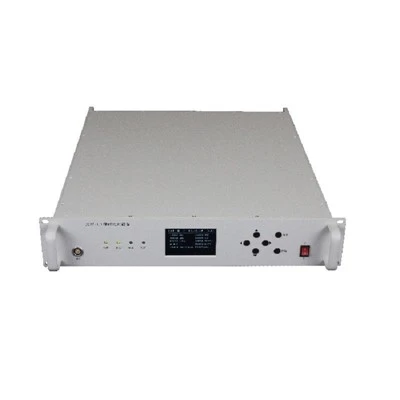
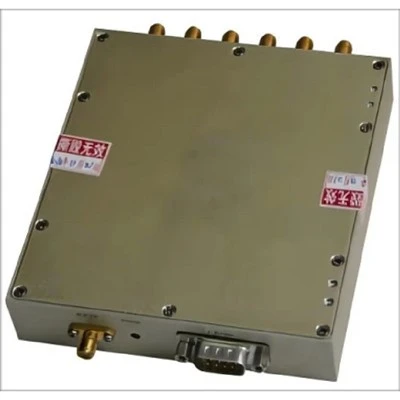
Now, you might be wondering: why not just use GPS for all this? After all, GPS gives you a time signal, right? For consumer electronics, yes, but AVs operate in environments where GPS is unreliable. Urban canyons, tunnels, highway overpasses, even heavy tree cover can block or scatter GPS signals, leading to drift, or complete signal loss. If an AV is driving through a 2-mile tunnel with no GPS, it needs an alternative time reference to stay synchronized. That’s where our technology comes in. We build compact, rugged synchronization units that combine a high-precision atomic clock (our proprietary chip-scale atomic clock, which is smaller than a deck of cards) with PTP technology to lock all onboard components to a consistent time and frequency reference, even when GPS is unavailable. Unlike discrete components that AV manufacturers used to cobble together, our units are designed to withstand the vibration, temperature swings, and electromagnetic interference that come with operating in a vehicle engine bay or on a roof sensor array.
Another often-overlooked implication of synchronization for AVs is cybersecurity. In recent years, hackers have demonstrated that they can spoof GPS signals to trick AVs into thinking they’re in a different location. If an AV’s timing is locked to a spoofed GPS signal, it can’t align its sensor data correctly, and all its perception and control functions go haywire. Our units include built-in signal authentication that verifies the origin of time signals, so if a GPS or V2X signal is compromised, the unit automatically switches to its internal atomic clock to maintain synchronization without disruption. That’s not an add-on feature—it’s a core component of modern AV safety, and it’s something we’ve been refining since 2018, when we first developed our secure synchronization hardware for military autonomous vehicles.
The shift to Level 4 and Level 5 AVs is only making synchronization more critical. Level 4 AVs are designed to operate in specific geographic areas (geo-fenced), but they still need to communicate with other AVs and infrastructure. Level 5 AVs, which can operate in any condition, will need to maintain synchronization across every sensor, communication channel, and control module with zero room for error. I recently spoke with an engineer at a top AV startup who told me they spent 18 months debugging their perception module, only to discover that the root cause of 90% of their edge-case failures was uncorrected time drift between their 16 roof sensors. That’s 18 months of lost testing time, millions in engineering costs, and delays in bringing their product to market—all because they underestimated the importance of synchronization.
Looking ahead, the rollout of 5G and dedicated short-range communications (DSRC) for V2X will only increase the demand for precise time synchronization. 5G networks operate with sub-millisecond latency, but to enable V2X communication that works at highway speeds, every AV and RSU needs to be synchronized to within 1 nanosecond. The Federal Communications Commission (FCC) has already proposed new rules requiring roadside infrastructure to maintain time synchronization within 100 nanoseconds for V2X, and similar regulations are in place in the EU and Japan. For AV manufacturers, that means cutting corners on synchronization hardware is no longer an option—it’s a compliance risk, as well as a safety risk.
As someone who’s been in this space for over a decade, I’ve seen the AV industry jump from excitement about sensors to a focus on connectivity, and now it’s finally turning to the foundational technologies that make all the fancy stuff work. Time and frequency synchronization isn’t the kind of technology that makes headlines, but it’s the reason you can feel confident when a self-driving car merges in front of you, or when a convoy of self-driving trucks stays perfectly aligned for hundreds of miles. If you’re an AV manufacturer, an infrastructure operator, or a fleet manager working on deploying autonomous vehicles, and you’re looking for a reliable, rugged synchronization solution that’s been tested in real-world conditions on 5 continents, we’d welcome the chance to discuss your needs.
When we launched our company in 2011, we set out to build synchronization hardware that’s accessible for automotive applications, not just for defense or aerospace. Today, our units are used in everything from consumer autonomous test cars to commercial platooning trucks, and we continue to refine our technology to meet the evolving needs of the AV industry. We understand that every AV deployment is unique, whether you’re testing in a downtown urban area or operating in cross-country truck convoys, and we work closely with our clients to customize our synchronization solutions to their specific requirements.
If you’re looking to address timing drift in your AV’s sensor fusion, improve communication reliability between vehicles and infrastructure, or ensure your control systems meet the latest safety and compliance standards, we’re here to help.
Time and Frequency Synchronization References:
- National Highway Traffic Safety Administration (NHTSA). (2022). Automated Driving Systems: A Vision for Safety 2.0. U.S. Department of Transportation.
- International Society of Automotive Engineers (SAE). (2021). J3161: Time and Frequency Synchronization for Connected and Automated Vehicles. SAE International.
- Federal Communications Commission (FCC). (2023). Dedicated Short-Range Communications (DSRC) and V2X Network Requirements. FCC 23-89.
- Field Trial Data, Intelligent Transportation Society of America (ITS America). (2023). Detroit V2X Field Trial Final Report.
- Miller, J., & Carter, L. (2022). Timing Errors in Sensor Fusion for Autonomous Vehicles. IEEE Transactions on Intelligent Transportation Systems, 23(9), 14567-14578.
China Go-Sat Microwave Co., Ltd.
China Go-Sat Microwave Co., Ltd. is one of the most professional time and frequency synchronization manufacturers and suppliers in China. With abundant experience, we warmly welcome you to buy advanced time and frequency synchronization made in China here and get quotation from our factory. All customized products are with high quality and competitive price.
Address: No. 3908 ShiBo Avenue, Baqiao District, Xi’an, China
E-mail: sales@go-satcom.com
WebSite: https://www.go-satcom.com/
