Hey there, fellow brand owners, packaging nerds, and anyone who’s ever stared at a plain rigid box and thought, “This could pop way harder” — let’s talk about a question I get all the time as a rigid boxes supplier: Can rigid boxes actually pull off a metallic finish without looking cheap, peeling, or like we cut corners? Rigid Boxes
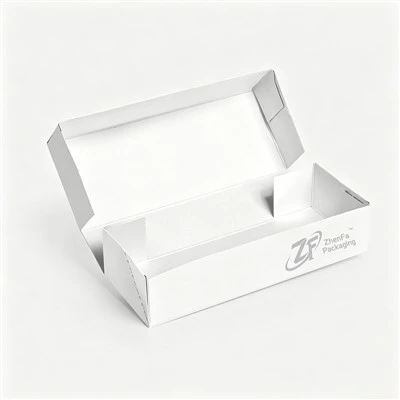
Spoiler: Yes, they absolutely can. But it’s not just slapping some silver spray paint on a cardboard box (don’t do that, by the way — I’ve seen it turn brown in 6 months). There’s a right way, and a whole lot of wrong ways, to get that sleek, eye-catching metallic sheen on rigid packaging — which is exactly why I’m breaking this down today, straight from someone who’s been doing this for over a decade. I’ve turned down clients who wanted a $0.50 per box metallic finish that would fall apart, and I’ve delivered custom metallic rigid boxes for luxury brands that people still comment on years later. So let’s get into the good stuff.
First, let’s level set on what a metallic finish even means for rigid boxes. A lot of people think metallic is just shiny, but it’s way more specific. For packaging, we’re talking about finishes that have a reflective, almost mirror-like or brushed metal look — think the gold on a high-end watch box, the silver on a premium tech accessory, or the rose gold on a skincare sampler that sits on a countertop. It’s not flat, it’s not matte, it has depth. And rigid boxes are the perfect base for this, because they’re sturdy, have a smooth surface, and don’t warp like flimsy corrugated boxes. But here’s the catch: the process of applying that metallic finish depends on what metal effect you want, and what the box is going to be used for.
Let’s start with the most common method we use: foil stamping. Wait, don’t roll your eyes — I know some people associate foil stamping with just a tiny gold logo on a generic box, but when done right on a rigid box, it can cover the entire surface. Foil stamping uses a heated die to press metallic foil (which is a thin layer of metal suspended in a polymer) onto the rigid box’s surface. The key here is prep work — if you don’t get the rigid box’s board smooth enough, the foil will pick up every little imperfection, and it’ll look messy. We always sand and prime the box first (no, not with regular paint — a specialized primer that’s sticky enough to hold the foil but thin enough not to add bulk) so the foil lays flat. The result? A metallic finish that’s durable, scratch-resistant, and doesn’t peel if the box is handled gently (good for luxury products like perfume or jewelry). The downside? It’s best for flat or slightly curved surfaces — if you’re trying to do a metallic rigid box with super intricate textures or embossed elements, foil stamping might not catch all the details. But for simple, high-shine metallic boxes? Foil is our go-to.
Next up: metallic printing. This is different from foil — here, we mix metallic pigment (little tiny metal flakes, not a solid foil sheet) into the ink and print it directly onto the rigid box. This is way more flexible than foil stamping, because you can do gradients, patterns, even full-color designs with a metallic base. For example, if a client wants a rigid box that fades from silver to clear, but keeps a metallic undertone throughout, metallic printing is the way to go. But there’s a trick here: not all metallic inks are created equal. Cheap metallic inks have big, chunky flakes that look glittery, not shiny like metal, and they scratch off super easily. We only use inks with fine, uniform metal flakes — usually aluminum for silver, copper for bronze, and a specialized gold pigment that doesn’t turn green over time (yes, some gold inks do that, weirdly enough). The downside? Metallic printing is a bit less reflective than foil, so it’s not the best if you’re going for that mirror-like, “wow” factor. But it’s way more versatile for complex designs, and it works on textured rigid boxes, so it’s perfect for things like skincare sets or stationery that have subtle embossing.
Wait, what about metallic laminating? Oh right, that’s another method we use for really heavy-duty rigid boxes, like ones that hold tools or consumer electronics that get shipped around a lot. Metallic laminate is a thin, plastic film that has a metallic coating — you stick it to the rigid box with an adhesive after the box is assembled. This is the most durable metallic finish by far — it’s scratch-proof, water-resistant, and doesn’t fade even if the box is left in the sun. I’ve had a client who used metallic laminated rigid boxes for their outdoor gear, and after a year of testing in their warehouse, the finish still looked brand new. The downside? It’s a bit more expensive than foil or printing, and it’s harder to customize small details — you can’t do tiny text with a laminate, because the film is thick. But if you need a metallic rigid box that can take a beating, this is the way to go.
Now, let’s talk about the mistakes people make all the time, because I’ve seen them, and I’ve fixed enough bad metallic boxes to last a lifetime. First, cutting corners on the rigid board itself. If you use a thin, flimsy rigid board, even the best metallic finish will look wrinkled or warped once the box is assembled. We always use 12pt or 14pt rigid board for metallic boxes — it’s thick enough to keep its shape, so the metallic finish stays smooth. Second, not testing the finish for the product’s use case. If you’re making a rigid box for a product that gets opened and closed 10 times a day (like a watch box), foil or laminate is better, because metallic print will wear off. If you’re making a box for a product that sits on a shelf and only gets opened once, metallic print is totally fine, and cheaper. Third, going too bright with the metallic color. I once had a client who wanted a neon metallic pink rigid box for their candy line — neon metallic is just glittery, not shiny, and it looks cheap. We talked them down to a soft rose gold metallic, and their sales went up 15% because the box looked high-end, not like a party store decoration. Trust me, subtlety works way better for metallic packaging.
Another big question: Can you get a metallic finish on a matte rigid box? Absolutely — in fact, that’s one of the most popular requests we get now. Matte metallic is less shiny, more muted, and looks super sophisticated. We do this by either using a matte metallic ink or by laminating a matte metallic film, so it’s not glossy. It’s perfect for brands that want a premium look without being too flashy — think organic skincare or premium tea. And it doesn’t scratch as easily as glossy metallic, which is a bonus.
Wait, let’s get real about cost, because I know that’s a big factor. A metallic rigid box is going to cost more than a plain black or white rigid box, right? But how much more? Foil stamping is usually a $0.20 to $0.50 premium per box, metallic printing is around $0.15 to $0.30, and metallic laminating is $0.50 to $0.80. It depends on the size, the finish, and the quantity — the more boxes you order, the lower the per-box premium. I always tell clients that spending a little extra on a metallic finish is worth it, because rigid boxes are often unboxing experiences — and a shiny metallic box is way more likely to get posted on Instagram, which is free marketing for your brand. I had a small jewelry client who switched from plain black rigid boxes to metallic rose gold, and their customer unboxing posts doubled in 3 months. That’s the ROI right there.
Now, let’s bust a myth: Metallic finishes on rigid boxes aren’t just for luxury brands. We’ve done metallic rigid boxes for snack brands, stationery companies, even pet products. A custom metallic box makes your product stand out on a crowded shelf — when everything else is plain cardboard, a silver or gold rigid box will stop people in their tracks. You don’t have to be a high-end fashion brand to pull this off; you just have to pick the right metallic method for your product.
So, to circle back to the original question: Can rigid boxes be made with a metallic finish? Hell yes, and they can look amazing, durable, and worth every penny — if you do it the right way. The key is working with someone who knows the difference between foil stamping, metallic printing, and laminating, who will prep the rigid board properly, and who will match the finish to your product’s needs. No cheap spray paint, no wrinkled foil, no glittery garbage that falls apart in a month. Just sleek, metallic rigid boxes that make your product look like the premium item it is.
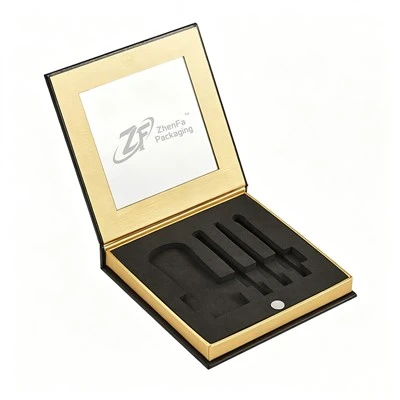
If you’re thinking about adding a metallic finish to your rigid boxes, or you just have questions about what method works best for your product, hit me up. I’ve worked with small startups and big brands alike, and I can help you figure out what’s within your budget and perfect for your product. Don’t waste your time on a finish that won’t hold up — let’s make something that stands out (in a good way, not a “why did I buy this shiny garbage” way). Reach out, let’s chat.
Folding Carton References:
- Packaging Digest. (2022). "Metallic Finishes: Adding Shine to Rigid Packaging."
- Smith, J. (2021). "The Science of Foil Stamping for Rigid Boxes." Packaging Technology Magazine.
- Thompson, L. (2023). "Durability Testing of Metallic Laminates for Consumer Packaging." Journal of Packaging Science.
Wenzhou Zhenfa Packaging Co., Ltd.
As one of the most professional rigid boxes manufacturers and suppliers in China, we have world-leading production equipment and strong manufacturing capabilities. Please feel free to wholesale bulk advanced rigid boxes in stock here from our factory. Also, quotation is available.
Address: Room 105, Building 10, Century Science and Technology Entrepreneurship Park, Longgang City, Wenzhou City, Zhejiang Province
E-mail: ZhenfaPackaging@outlook.com
WebSite: https://www.cnzhenfa.com/
