In the ever – evolving landscape of computer hardware, Mini and Nano ITX motherboards have carved out a niche for themselves, offering compact yet powerful solutions for a wide range of applications. As a供应商 of Nano ITX motherboards (though I’ll use a more natural English term here – as a supplier of Nano ITX motherboards), I am frequently asked about the types of USB ports available on these motherboards. In this blog post, I’ll delve into the various USB port types you can find on a Nano ITX motherboard, their features, and how they can benefit your projects. Nano ITX Motherboard
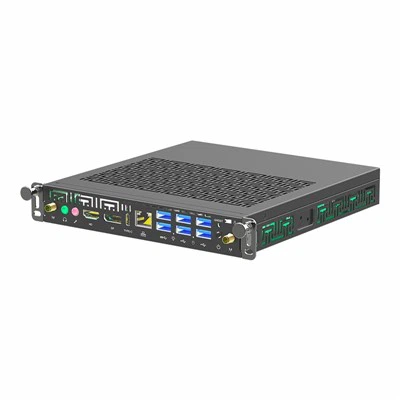
1. USB 2.0 Ports
USB 2.0 is an older but still widely used standard. It was first introduced in April 2000 and has since become a staple in the world of computer peripherals. On a Nano ITX motherboard, you’ll often find several USB 2.0 ports.
Features
- Data Transfer Speed: USB 2.0 offers a maximum data transfer rate of 480 Mbps. While this may seem slow compared to newer standards, it’s more than sufficient for many common peripherals such as keyboards, mice, and external hard drives with lower data transfer requirements.
- Power Output: USB 2.0 ports can supply up to 500 mA of power at 5V. This is enough to power most low – power devices without the need for an external power source.
- Compatibility: One of the greatest advantages of USB 2.0 is its wide compatibility. Almost all older and many newer peripherals support USB 2.0, making it a versatile choice for a variety of devices.
Use Cases
- Input Devices: Keyboards and mice are the most common devices connected to USB 2.0 ports. These devices do not require high – speed data transfer, and USB 2.0 provides a stable and reliable connection.
- External Storage: USB 2.0 is suitable for smaller external hard drives or USB flash drives with relatively slow read and write speeds. If you mainly use these devices for storing and transferring small files, USB 2.0 will work just fine.
2. USB 3.0 and 3.1 Ports
USB 3.0, also known as SuperSpeed USB, was released in November 2008 to address the increasing need for higher data transfer rates. USB 3.1 is an enhanced version of USB 3.0, offering even faster speeds.
Features
- Data Transfer Speed: USB 3.0 has a maximum data transfer rate of 5 Gbps, which is more than ten times faster than USB 2.0. USB 3.1 Gen 1 has the same speed as USB 3.0, while USB 3.1 Gen 2 can reach up to 10 Gbps.
- Power Output: USB 3.0 and 3.1 ports can provide up to 900 mA of power at 5V. This allows them to power more power – hungry devices, such as some external hard drives, without an additional power adapter.
- Backward Compatibility: USB 3.0 and 3.1 are backward – compatible with USB 2.0 devices. This means that you can plug a USB 2.0 device into a USB 3.0 or 3.1 port, and it will work at the slower USB 2.0 speed.
Use Cases
- External Storage: USB 3.0 and 3.1 are ideal for high – speed external hard drives and SSDs. They can significantly reduce the time it takes to transfer large files, such as high – definition videos or large software packages.
- High – Speed Data Transfer Devices: Devices like external video capture cards and high – resolution webcams can benefit from the high – speed data transfer capabilities of USB 3.0 and 3.1 ports.
3. USB Type – C Ports
USB Type – C is a relatively new connector type that has gained popularity in recent years due to its versatility and compact size. More and more Nano ITX motherboards are starting to include USB Type – C ports.
Features
- Reversible Design: One of the most notable features of USB Type – C is its reversible design. You don’t have to worry about which way to insert the cable, making it much more user – friendly.
- High – Speed Data Transfer: USB Type – C can support various USB standards, including USB 3.1 Gen 2 and even USB 3.2 Gen 2×2, which offers a maximum data transfer rate of 20 Gbps.
- Power Delivery: USB Type – C ports can support Power Delivery (PD) technology, allowing them to deliver up to 100W of power. This means that you can use a single USB Type – C cable to charge your device and transfer data simultaneously.
Use Cases
- Thunderbolt Devices: Some USB Type – C ports on Nano ITX motherboards support Thunderbolt 3 or Thunderbolt 4, which offer extremely high data transfer rates (up to 40 Gbps) and can be used to connect high – performance devices such as external GPUs and high – end displays.
- Mobile Devices: USB Type – C is the standard connector for many modern smartphones and tablets. You can easily connect your mobile device to a Nano ITX motherboard with a USB Type – C port for charging and data transfer.
4. USB 3.2 Gen 2×2 Ports
USB 3.2 Gen 2×2 is the latest and fastest USB standard available on some high – end Nano ITX motherboards.
Features
- Data Transfer Speed: As mentioned earlier, USB 3.2 Gen 2×2 offers a maximum data transfer rate of 20 Gbps. This is twice as fast as USB 3.1 Gen 2, making it the ideal choice for applications that require extremely high – speed data transfer.
- Compatibility: Like other USB standards, USB 3.2 Gen 2×2 is backward – compatible with lower – speed USB devices.
Use Cases
- Ultra – High – Speed Storage: USB 3.2 Gen 2×2 ports are perfect for connecting the latest high – performance external SSDs. They can fully utilize the speed of these drives, allowing you to transfer large files in a matter of seconds.
- Professional Video Editing: In the field of professional video editing, where large video files need to be transferred quickly, USB 3.2 Gen 2×2 ports can significantly improve workflow efficiency.
Conclusion
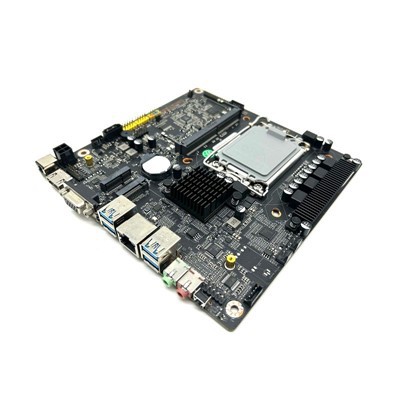
As a supplier of Nano ITX motherboards, I understand the importance of having a variety of USB port types on the motherboard to meet the diverse needs of our customers. Whether you’re looking for a low – cost solution for basic input devices with USB 2.0, high – speed data transfer capabilities with USB 3.0/3.1, the versatility of USB Type – C, or the ultra – high – speed performance of USB 3.2 Gen 2×2, our Nano ITX motherboards have you covered.
Customized OPS PC If you’re in the market for a Nano ITX motherboard and have specific requirements regarding USB ports or other features, I encourage you to reach out to us for a detailed discussion. We can work with you to find the best motherboard solution for your project, ensuring that you get the performance and functionality you need. Contact us to start a procurement discussion, and let’s build your next great computing system together.
References
- USB Implementers Forum official documentation for USB standards
- Various technical review articles on computer hardware and motherboard technology
Shenzhen HJS Technology Group
Shenzhen HJS Technology Group is one of the most experienced nano ITX motherboard manufacturers and suppliers in China, featured by quality products and good service. Please rest assured to buy CE approved nano ITX motherboard made in China here from our factory. For price consultation, contact us.
Address: F10, Wanhe Technology Building C, No. 7 HuiTong Road, Fenghuang Street, Guangming New District, Shenzhen. China.
E-mail: info@hjs-pc.com
WebSite: https://www.hjs-pc.com/
