As a seasoned switchgear supplier, I’ve witnessed firsthand the distinct characteristics and applications of AC and DC switchgear. These two types of switchgear play crucial roles in electrical systems, but they differ significantly in terms of design, functionality, and application. In this blog, I’ll delve into the key differences between AC and DC switchgear to help you make informed decisions when it comes to your electrical infrastructure. Switchgear

1. Basic Principles of AC and DC
Before we explore the differences in switchgear, it’s essential to understand the fundamental principles of alternating current (AC) and direct current (DC). AC is the type of electricity that is commonly used in homes and businesses. It alternates its direction periodically, typically at a frequency of 50 or 60 Hz. DC, on the other hand, flows in only one direction. Batteries and solar panels are common sources of DC power.
2. Design Differences
Arc Extinction
One of the most significant differences between AC and DC switchgear lies in the way they handle arcs. When a switchgear interrupts an electrical circuit, an arc is formed due to the ionization of the air between the contacts. In AC circuits, the current naturally crosses zero twice during each cycle. This zero – crossing point allows the arc to extinguish more easily. The alternating nature of the current causes the arc to be extinguished and re – established with each cycle, and modern AC switchgear is designed to take advantage of this characteristic.
In DC circuits, there is no natural zero – crossing point. Once an arc is formed, it is much more difficult to extinguish. DC switchgear, therefore, requires more sophisticated arc – extinguishing techniques. These can include using magnetic fields to blow the arc into a chamber filled with an arc – quenching medium, such as SF6 gas or vacuum.
Contact Design
The contact design of AC and DC switchgear also varies. AC switchgear contacts are designed to handle the rapid changes in current direction. They are often made of materials that can withstand the mechanical and thermal stresses associated with the frequent make and break operations.
DC switchgear contacts, however, need to be able to handle the continuous flow of current in one direction. The contact materials and the design must be able to prevent excessive wear and overheating due to the constant current flow. For example, some DC switchgear contacts are made of materials with high conductivity and good resistance to arcing, such as copper – tungsten alloys.
3. Voltage and Current Ratings
Voltage Ratings
AC switchgear is commonly available in a wide range of voltage ratings, from low – voltage applications (such as 400V in commercial buildings) to high – voltage transmission levels (up to 765 kV or even higher). The design of AC switchgear is optimized for these different voltage levels, with appropriate insulation materials and clearances to ensure safe operation.
DC switchgear voltage ratings also vary, but they are often more limited compared to AC. Low – voltage DC switchgear is commonly used in battery – powered systems, such as in automotive and telecommunications applications, typically ranging from 12V to 48V. High – voltage DC (HVDC) switchgear is used in long – distance power transmission and is usually in the range of hundreds of kilovolts. However, the technology for HVDC switchgear is still developing, and the available voltage ratings are not as extensive as those for AC switchgear.
Current Ratings
AC switchgear can handle a wide range of current ratings, from a few amperes in small household circuits to thousands of amperes in industrial applications. The current – carrying capacity of AC switchgear is determined by factors such as the size of the conductors, the cooling system, and the contact materials.
DC switchgear current ratings are also diverse, but they are often designed to handle specific types of loads. For example, DC switchgear used in battery charging systems may have lower current ratings compared to those used in large – scale DC power distribution systems.
4. Applications
AC Switchgear Applications
AC switchgear is widely used in various electrical systems. In residential buildings, it is used to distribute power from the main electrical supply to different circuits, such as lighting, sockets, and appliances. In commercial and industrial settings, AC switchgear is used to control and protect electrical equipment, such as motors, transformers, and generators. It is also a key component in power substations, where it is used to switch and protect high – voltage transmission lines.
DC Switchgear Applications
DC switchgear is mainly used in applications where DC power is required. In the automotive industry, it is used in battery management systems and electric vehicle charging stations. In the telecommunications industry, DC switchgear is used to power communication equipment, such as servers and base stations. DC switchgear is also essential in renewable energy systems, such as solar power plants, where it is used to control and protect the flow of DC power from the solar panels to the inverters or energy storage systems.
5. Protection and Control
Protection
Both AC and DC switchgear are equipped with protection devices to safeguard the electrical system from faults such as overcurrent, short – circuit, and overvoltage. However, the protection requirements and the types of protection devices used can differ.
In AC systems, overcurrent protection is often provided by circuit breakers or fuses. These devices are designed to trip when the current exceeds a certain threshold, thereby protecting the electrical equipment from damage. Overvoltage protection in AC systems can be achieved using surge arresters, which divert the excess voltage to the ground.
In DC systems, the protection requirements are more complex due to the absence of the natural zero – crossing point. DC circuit breakers need to be able to interrupt the DC current quickly and reliably. Specialized protection devices, such as DC fuses and DC surge protectors, are also used to protect DC systems from faults.
Control
AC switchgear can be controlled remotely using various control systems, such as programmable logic controllers (PLCs) and supervisory control and data acquisition (SCADA) systems. These control systems allow for the automatic operation and monitoring of the switchgear, enabling operators to manage the electrical system more efficiently.
DC switchgear control is also important, especially in applications where precise control of the DC power flow is required. For example, in battery – powered systems, the switchgear needs to be able to control the charging and discharging of the batteries. DC switchgear can be controlled using similar control systems as AC switchgear, but the control algorithms may need to be adjusted to account for the unique characteristics of DC power.
Conclusion
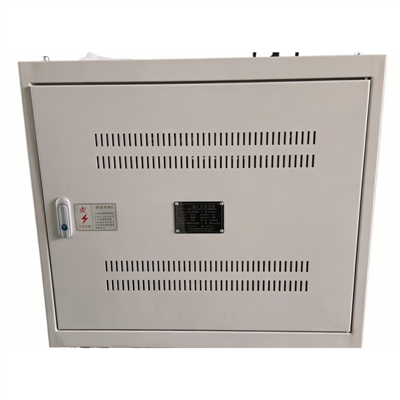
In conclusion, AC and DC switchgear have distinct differences in design, voltage and current ratings, applications, and protection and control. Understanding these differences is crucial for selecting the right switchgear for your electrical system. As a switchgear supplier, I am committed to providing high – quality AC and DC switchgear solutions that meet the specific needs of our customers. Whether you are looking for switchgear for a residential, commercial, or industrial application, we have the expertise and products to support you.
Switchgear If you are interested in learning more about our switchgear products or would like to discuss your specific requirements, please feel free to contact us. Our team of experts is ready to assist you in making the best decision for your electrical infrastructure.
References
- Electrical Power Systems: Design and Analysis by Turan Gonen
- Switchgear Handbook by Eaton Corporation
- High – Voltage Direct Current Transmission by B. K. Bose
Huachi Electric Co., Ltd.
We’re well-known as one of the leading switchgear manufacturers in China, featured by quality products and good service. Please rest assured to buy customized switchgear made in China here from our factory. Contact us for more details.
Address: Plastic Park, Tongyu Street, Luqiao District, Taizhou City, Zhejiang Province
E-mail: HCDQ2026@163.com
WebSite: https://www.huachi-electric.com/
