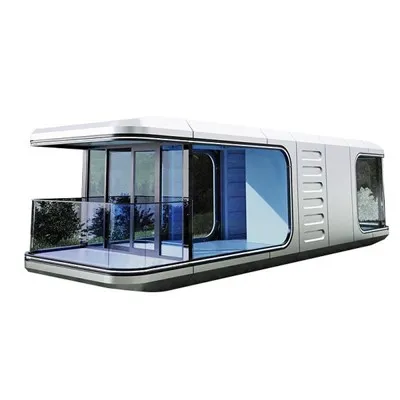
In the dynamic realm of space exploration, space capsules stand as pivotal vessels, bridging the chasm between Earth and the boundless expanse of space. As a leading space capsule supplier deeply entrenched in this ever – evolving industry, I am thrilled to delve into the future development trends that are poised to reshape the landscape of space capsules. Space Capsule
Enhanced Safety Features
Safety has always been the linchpin in the design and operation of space capsules. In the future, we can expect a quantum leap in safety technologies. Advanced materials will play a crucial role. For instance, the use of next – generation composites that are not only lighter but also possess superior heat – resistant and impact – absorbing properties. These materials will be able to withstand the harsh conditions of re – entry, reducing the risk of structural failures.
Another area of focus will be on the development of more reliable life – support systems. Redundancy will be increased to ensure that even in the event of a component failure, the crew’s survival is not compromised. For example, multiple oxygen generation and carbon dioxide removal systems will be installed, allowing for seamless operation if one system malfunctions.
Furthermore, the integration of artificial intelligence (AI) will revolutionize safety on board. AI systems will be capable of continuously monitoring the capsule’s vital signs, such as pressure, temperature, and air quality. They can predict potential equipment failures well in advance, enabling the crew or mission control to take preventive measures. AI – powered emergency response systems will also be developed, which can autonomously initiate rescue procedures in case of critical situations, such as a sudden loss of power or a radiation leak.
Improved Reusability
In recent years, the concept of reusability has gained significant traction in the space industry, and space capsules are no exception. Reusable space capsules offer several advantages, including cost savings and reduced environmental impact. In the future, we anticipate that the level of reusability will be enhanced even further.
Currently, some space capsules have already achieved partial reusability, with key components like the heat shield being designed for multiple uses. However, in the coming years, we aim to make the entire capsule reusable. This will involve the development of more robust landing and recovery systems. For example, the use of advanced parachute designs and precision landing technologies, such as rocket – powered retro – thrusters, will ensure that the capsule can land safely and accurately, minimizing damage and facilitating quick turnaround times for subsequent missions.
Moreover, the maintenance and refurbishment processes for reusable capsules will become more streamlined. Standardized procedures and modular designs will allow for rapid inspection and replacement of worn – out parts. This will not only reduce the time and cost associated with reconditioning the capsule but also increase its overall reliability and service life.
Expansion of Payload Capabilities
As the scope of space exploration broadens, the demand for larger and more diverse payloads will continue to grow. Future space capsules will be designed to accommodate a wider range of cargo, including scientific instruments, satellites, and even habitats for long – duration space missions.
To achieve this, we will see an increase in the physical size of space capsules. Advanced engineering techniques will be employed to optimize the internal volume of the capsule while maintaining its structural integrity. This will enable more efficient use of space and allow for the transportation of bulkier and heavier payloads.
In addition, the design of the payload bay will become more flexible. Modular payload systems will be developed, which can be easily configured to meet the specific requirements of different missions. This will allow for a greater variety of experiments and equipment to be carried on board, facilitating a more comprehensive understanding of space and its phenomena.
Long – Duration Space Travel
With the prospect of human missions to Mars and other deep – space destinations on the horizon, space capsules will need to be adapted for long – duration space travel. This will require significant advancements in several areas, including life – support, radiation protection, and crew comfort.
Life – support systems will need to be capable of sustaining the crew for extended periods without resupply. Closed – loop life – support systems, which recycle and reuse water, air, and other vital resources, will be a key focus. These systems will not only reduce the reliance on Earth – based supplies but also minimize the environmental impact of long – duration missions.
Radiation protection is another critical aspect of long – duration space travel. The harsh radiation environment in deep space poses a significant threat to the health of the crew. Future space capsules will be equipped with advanced radiation shielding materials, such as polyethylene and liquid hydrogen, which can effectively absorb and deflect radiation.
In terms of crew comfort, the interior design of the space capsule will be reimagined. Larger living quarters, improved ergonomics, and enhanced recreational facilities will be provided to reduce the psychological stress associated with long – term confinement in space. Virtual reality (VR) and augmented reality (AR) technologies may also be integrated to provide the crew with a more immersive and engaging experience during their journey.
Autonomous Operations
The future of space capsules will also be characterized by a greater degree of autonomous operations. Autonomous systems will be able to perform a wide range of tasks, from navigation and docking to payload deployment and maintenance.
AI and machine learning algorithms will be at the heart of these autonomous systems. They will be able to analyze vast amounts of data in real – time, make informed decisions, and adapt to changing conditions without human intervention. For example, an autonomous navigation system can adjust the capsule’s trajectory based on real – time sensor data, such as the position of celestial bodies and the presence of space debris.
Autonomous docking systems will be developed to enable the capsule to dock with space stations, satellites, or other vehicles without the need for a human pilot. This will not only increase the efficiency of space operations but also reduce the risk of human error during critical maneuvers.
Commercialization and Tourism
The commercialization of space is a trend that is rapidly gaining momentum, and space capsules will play a central role in this new era of space exploration. As space tourism becomes a reality, there will be a growing demand for space capsules that are specifically designed to cater to the needs of tourists.
These tourist – oriented space capsules will focus on providing a safe, comfortable, and awe – inspiring experience for passengers. They will feature large windows for panoramic views of space, state – of – the – art entertainment systems, and luxurious amenities. In addition, the training and support provided to tourists will be carefully tailored to ensure that they are well – prepared for their space journey.
On the commercial side, space capsules will be used for a variety of applications, such as satellite deployment, space – based manufacturing, and asteroid mining. The ability to transport payloads to and from space in a cost – effective and efficient manner will be crucial for the success of these commercial ventures.
As a space capsule supplier, we are at the forefront of these exciting developments. Our team of engineers and scientists is constantly working on cutting – edge technologies to meet the future demands of the space industry. We are committed to providing high – quality, reliable, and innovative space capsules that will enable humanity to explore the cosmos with greater safety and efficiency.
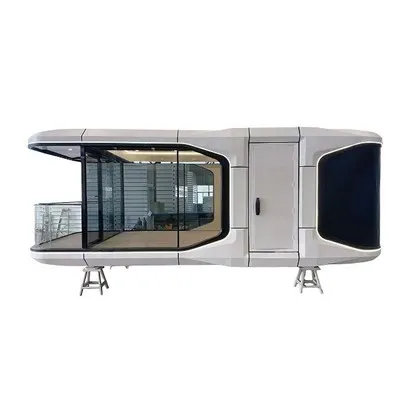
Standard Apple Cabin If you are interested in procuring space capsules for your space missions, whether they are scientific research, commercial ventures, or space tourism, we invite you to contact us for a detailed discussion. Our experts are ready to work with you to understand your specific requirements and provide customized solutions that meet your needs.
References
- "Space Systems Engineering" by James R. Wertz and Wiley J. Larson
- "Fundamentals of Astrodynamics and Applications" by David A. Vallado
- "The Future of Space Exploration" by various authors in scientific journals and publications
Aoborui Seiko Technology (Weifang) Co., Ltd.
As one of the most professional space capsule manufacturers and suppliers in China, we also support customized service. Please feel free to wholesale high-grade space capsule made in China here from our factory. Welcome to view our website for more information.
Address: Building 38, Zhongnan High-tech, Weifang Yuandu Huizhi Industrial Park, No. 3999, Taixiang Street, Hanting District, Weifang City, Shandong Province
E-mail: admin@sino-abr.com
WebSite: https://www.sinoabr.com/
